Certificate of Analysis
At Black Bear Hemp Dispensary, we believe in full transparency and rigorous quality control. That's why every batch of our products is tested by accredited laboratories, and the results are made readily available for your review. Our Certificate of Analysis (CoA) reports provide detailed insights into the purity, potency, and safety of our products, helping you make informed decisions with confidence.
Simply use the search feature below to find the CoA for a product you've purchased or to explore lab results before making your next purchase.
Search By Batch/Name
Find your lab report by entering the batch number or name of the product. Our Certificate of Analysis (COA) reports provide detailed insights into the purity, potency, and safety of our products, helping you make informed decisions with confidence.
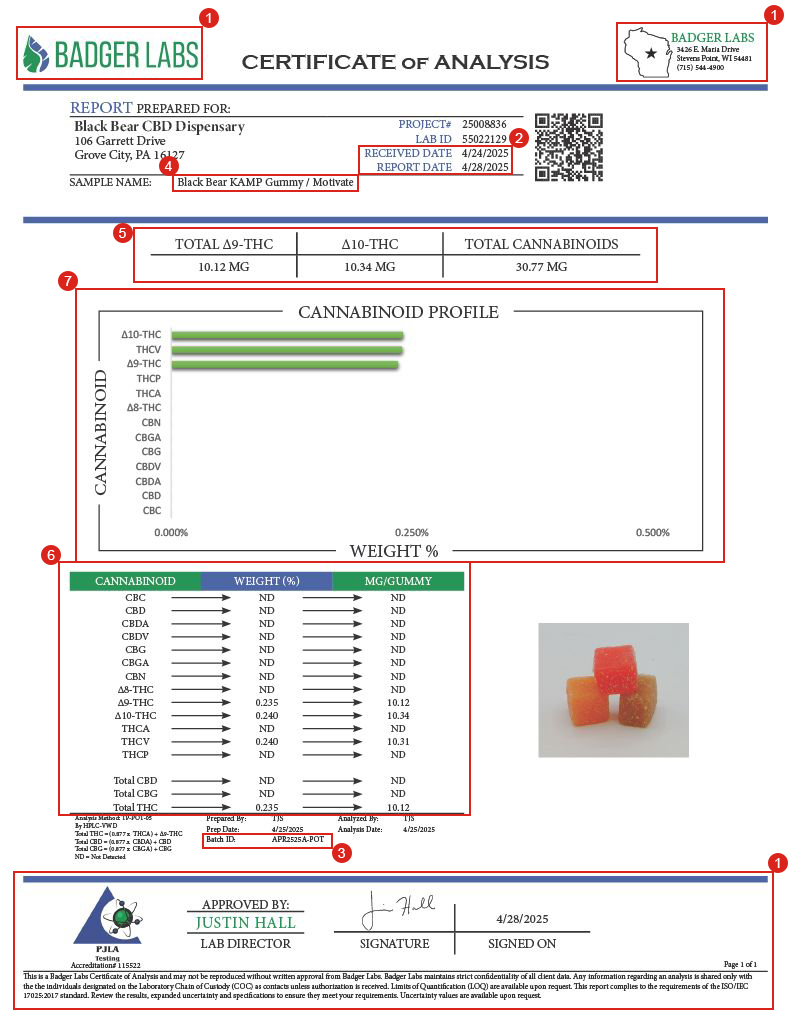
Still having trouble finding the batch number? See this example.
Locate the Batch Number
Find the batch number on the bottle label, box, or sticker on the bottom of the container.
Enter and Search
Type the batch number or product name into the search bar above and click “MyCOA” to view the results.
Quick QR Access
Some products include a QR code for instant access. Simply scan with your smartphone camera.
Black Bear Dispensary